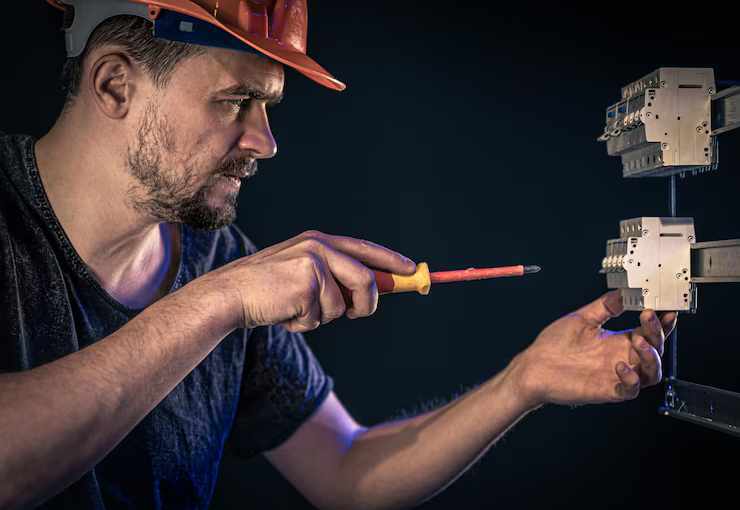
Repair of electrical installations
Safe, fast fixes for your wiring and power issues
When an electrical installation starts acting up, the risks range from annoying power interruptions to serious safety hazards. Our team repairs faulty electrical installations in homes, apartments, offices, and commercial premises, restoring safe operation with minimal disruption. Whether you are dealing with repeated breaker trips, flickering lights, warm sockets, or unexplained power loss, we diagnose the cause and repair it to current safety expectations.
We work on both older systems and newer setups, including fuse boards, circuit breakers, sockets, switches, lighting circuits, and fixed wiring. Every visit focuses on safety, clear communication, and workmanship that lasts, so you can use your electrical system with confidence.
Common problems we repair
Electrical faults can be caused by wear, overload, moisture, loose connections, or earlier workmanship that no longer meets today’s demands. If you notice any of the issues below, arranging a professional inspection and repair is the safest next step.
- Breakers or fuses that trip repeatedly, especially when specific appliances run
- Flickering or dimming lights, buzzing fittings, or lamps burning out too quickly
- Loose, cracked, or discolored sockets and switches, or outlets that feel warm
- Partial power loss in one area, intermittent power, or circuits that cut out
- Burning smells, sparking, or visible arcing from outlets or panels
- Water related faults in kitchens, bathrooms, basements, and outdoor circuits
- Damaged cables from DIY work, rodents, or general deterioration
Some symptoms seem minor but can indicate overheating conductors or poor earthing. If there is any sign of heat, smoke, or sparking, stop using the circuit and contact us for emergency electrical services as soon as possible.
Our repair process, from diagnosis to tested handover
1. Fault finding and clear explanations
We start by listening to what you are experiencing, when it happens, and which circuits or appliances are involved. Then we carry out structured electrical troubleshooting using appropriate test equipment to confirm the fault, identify underlying causes, and rule out hidden damage. You will receive a clear explanation of what is wrong, what needs to be repaired, and what can be improved to prevent repeat failures.
2. Safe isolation and compliant repairs
Before any work begins, we isolate the affected circuits and verify that the area is safe to work on. Repairs may include re terminating loose connections, replacing worn sockets or switches, repairing junction points, correcting polarity issues, restoring earthing, or replacing damaged cable sections. Where a consumer unit or protective device is involved, we check coordination and suitability so the system can protect people and property as intended.
3. Testing and documentation
After the repair, we test the installation to confirm correct operation and safety. Depending on the fault, this can include continuity checks, insulation resistance, earth fault loop measurements, and RCD verification. We also confirm that circuits are correctly labeled and that any replaced components match the required ratings. If you need ongoing support, we can align repairs with broader electrical maintenance services to reduce downtime and prevent recurring issues.
Residential and commercial electrical installation repairs
Homes and rental properties
In residential settings, faults often appear as nuisance tripping, weak connections in older outlets, overloaded kitchen circuits, or problems after renovations. We repair fixed wiring, lighting circuits, extractor connections, immersion heaters, and outdoor feeds, with attention to safe zones, moisture protection, and correct earthing. We can also advise on practical improvements such as adding dedicated circuits for high load appliances or upgrading protection where appropriate.
Offices, retail, and light industrial sites
Commercial electrical faults can disrupt operations and create compliance concerns. We troubleshoot and repair distribution circuits, lighting and emergency lighting feeds, socket circuits, and fixed equipment connections. When required, we can plan repairs around business hours, provide temporary safe arrangements, and coordinate with facilities teams to keep your site running.
If you are comparing providers, our approach is built around reliable licensed electrician services, careful testing, and repairs that prioritize safety and continuity.
When to call, and how to prepare for the visit
Call promptly if you notice burning smells, repeated tripping, shocks or tingling from metal surfaces, or any visible sparking. These can indicate dangerous faults that should not be ignored. If safe to do so, switch off the affected circuit at the consumer unit and unplug devices on that circuit.
To help us diagnose the issue efficiently, note when the problem occurs, which rooms are affected, and whether any new appliance or recent work coincided with the fault. Clear access to the consumer unit and key outlets or fittings also speeds up testing and reduces disruption.
Quality, safety, and respect for your property
We treat electrical repairs as safety critical work. Our electricians use suitable materials, correct ratings, and proper termination methods, then verify the results through testing. We work cleanly, protect finishes where possible, and explain what was repaired and how to avoid similar problems in the future.
If your installation shows wider signs of age or repeated failures, we can recommend targeted upgrades, but we never push unnecessary replacements. Our goal is a safe, dependable electrical installation that works as expected, day after day.
FAQ
What should I do if my breaker keeps tripping?
Unplug devices on the affected circuit and reset the breaker once. If it trips again, stop using that circuit and arrange a professional inspection, as repeated tripping often indicates overload, a short, or insulation damage.
Can you repair electrical faults without replacing the whole installation?
Yes, many issues are localized and can be resolved by repairing terminations, replacing damaged outlets, correcting earthing, or replacing a faulty protective device. If we find wider deterioration, we will explain the options and prioritize safety focused, cost effective steps.
Are flickering lights always an electrical fault?
Not always, but frequent flicker can be caused by loose connections, failing switches, overloaded circuits, or issues at the fitting. We test the circuit to find the cause and repair it, which helps prevent overheating and further damage.