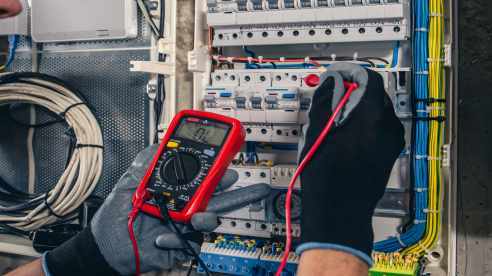
Electrical panel repair
Electrical Panel Repair
Your electrical panel is the control center for power in your home or business. When something goes wrong, it can cause flickering lights, tripped breakers, burning smells, or even a complete loss of power. Electrical panel problems are not only inconvenient, they can also be dangerous if ignored. Our team provides careful, code compliant electrical panel repair to restore safe, reliable power and protect your property.
Whether you have an older fuse board, a modern consumer unit, or a three phase distribution panel, we diagnose the cause and complete repairs using the correct parts and tested methods. If the issue points to a larger risk, we will explain your options clearly so you can make an informed decision.
Common Electrical Panel Problems We Repair
Many panel faults start small and get worse over time due to heat, corrosion, vibration, moisture, or overloaded circuits. If you are unsure what you are seeing, we can assess it as part of our electrical troubleshooting and provide a clear repair plan.
- Breakers that trip repeatedly due to overloaded circuits, short circuits, ground faults, or failing breakers
- Warm panel cover or burning odor that may indicate loose connections, arcing, or damaged busbars
- Buzzing or crackling sounds often linked to poor connections or worn components
- Flickering or dimming lights caused by loose neutral connections, voltage drop, or uneven loads
- Corrosion or water damage inside the enclosure, especially near entry points or outdoor panels
- Old or recalled equipment where parts degrade and safety performance is reduced
- Insufficient capacity when new appliances, EV chargers, or renovations increase demand
Our Panel Repair Process
Electrical panel repair should never be guesswork. We work methodically to identify the root cause, confirm safe operation, and document what was done. If your situation needs broader support beyond the panel itself, we can coordinate related electrical repair services such as circuit repairs or wiring corrections.
1. Safety first and fault isolation
We begin by discussing the symptoms and checking for immediate hazards. When needed, we isolate circuits, verify the absence of voltage, and use appropriate testing equipment before opening the panel. If there is evidence of overheating or arcing, we treat it as a priority.
2. Detailed inspection and testing
We inspect breakers, neutral and earth bars, cable terminations, busbar condition, and signs of moisture or heat stress. Testing may include load checks, continuity, insulation resistance, polarity verification, and voltage measurements under typical usage.
3. Repair, replacement, and secure re termination
Depending on the diagnosis, repairs may involve replacing faulty breakers, correcting loose or undersized conductors, cleaning corrosion where appropriate, improving cable management, or replacing damaged components. We tighten and torque connections to specification, then re test to confirm stable performance.
4. Verification and practical guidance
After repairs, we confirm that circuits operate correctly and that protective devices trip as intended. We also explain what caused the issue and how to reduce the chance of it returning, such as redistributing loads or scheduling periodic inspections.
When Repair Is Not Enough
Some panels can be repaired safely, while others should be upgraded for long term reliability and compliance. We will never pressure you into unnecessary work, but we will be honest if your current setup presents a continuing risk.
- Frequent overheating or arcing that suggests internal damage beyond a single component
- Limited breaker space that leads to unsafe additions or repeated overloads
- Outdated equipment with poor availability of correct replacement parts
- Visible damage to busbars or compromised insulation inside the enclosure
- Property changes like extensions, heat pumps, EV charging, or higher occupancy
If an upgrade is recommended, we can handle it as part of broader electrical upgrades, including labeling, testing, and commissioning so you know exactly what has changed and why.
Residential and Commercial Panel Repair
We support homeowners, landlords, and businesses with panel repairs that minimize disruption while maintaining strict safety standards. For homes, we focus on reliable daily use, safe protection devices, and tidy workmanship. For commercial sites, we consider uptime, load planning, and clear circuit identification for easier maintenance.
We can work with scheduled access windows and coordinate with facility teams where needed. If your property has sensitive equipment, we can discuss isolation plans and staged testing to reduce risk to operations.
What to Do If You Suspect a Panel Issue
- Do not ignore burning smells, smoke, crackling, or a hot panel cover.
- If it is safe, switch off affected circuits and unplug high load appliances.
- Do not attempt to tighten connections or replace breakers without proper training.
- Arrange an inspection promptly, especially if breakers trip repeatedly.
Electrical panel faults can develop quickly, but with a proper inspection and repair, most issues can be resolved before they cause wider damage. Contact us to schedule electrical panel repair and restore safe, dependable power.
FAQ
Why does my breaker keep tripping even when nothing is plugged in?
This often points to a fault on the circuit, such as a short, a ground fault, or damaged wiring, not just an overload. An electrician can test the circuit and the breaker to identify whether the issue is the protective device or the wiring it is protecting.
Is a buzzing sound from the electrical panel dangerous?
Buzzing can be caused by a failing breaker, loose connection, or arcing, and it should be treated as urgent. Turn off non essential loads if safe and arrange an inspection, because heat buildup can lead to damage or fire risk.
Can you repair part of a panel, or does the whole panel need replacement?
Many issues can be fixed by replacing a faulty breaker, re terminating loose conductors, or correcting a specific circuit fault. If the busbar is damaged, the enclosure is compromised, or the equipment is outdated and unsafe, a full panel replacement may be the safer option.