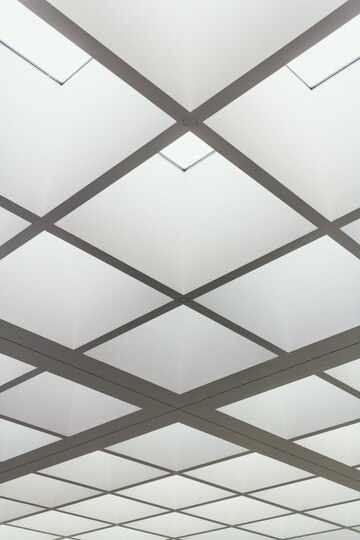
Suspended ceilings

Suspended ceilings

Suspended ceilings

Suspended ceilings, also called drop ceilings or false ceilings, are a practical way to improve comfort, acoustics, lighting, and the overall look of a room. They create a secondary ceiling below the structural slab, giving you a clean finish while leaving space for services such as wiring, ductwork, sprinkler lines, and pipework. Whether you are refreshing a single room or fitting out a full office, a properly installed suspended ceiling can transform the space without major structural disruption.

We supply and install suspended ceiling systems for homes, retail units, offices, medical spaces, and commercial interiors. Our team helps you choose the right system for your needs, then installs it with careful alignment, stable support, and a finish that looks sharp from every angle.

Where suspended ceilings work best

A suspended ceiling is not just a design feature. It solves common interior problems and supports future maintenance by keeping essential services accessible. Depending on the tile type and grid system, it can also improve sound control, conceal uneven concrete, and increase energy efficiency by reducing the volume of air that needs to be heated.

Typical applications

  • Offices and meeting rooms for acoustic comfort, clean lighting layouts, and easy access to services
  • Retail and hospitality to create a uniform ceiling line and incorporate feature lighting
  • Kitchens and utility areas where moisture resistant tiles and wipeable finishes are important
  • Basements and conversions to hide pipes and cables while maintaining access panels where needed
  • Healthcare and education with hygienic, easy to clean tile options and compliant installations

If your project also includes partitions or a full fit out, we can coordinate the ceiling layout with adjoining works. Many clients combine suspended ceilings with wall and ceiling construction so lighting, vents, and bulkheads align perfectly across the space.

Systems and finishes we install

Choosing the right ceiling depends on performance requirements and the look you want. We guide you through tile types, grid profiles, and access needs, then confirm levels and service routes before installation begins. Our goal is a ceiling that performs well, stays stable, and remains easy to maintain.

Popular suspended ceiling options

  • Mineral fibre tiles for reliable acoustic performance and cost effective commercial use
  • Moisture resistant tiles for kitchens, washrooms, and areas with higher humidity
  • Metal ceiling tiles for modern finishes, durability, and easy cleaning
  • Acoustic panels for studios, open plan offices, and rooms where sound control matters
  • Concealed grid systems for a refined appearance with a more seamless ceiling line
  • Access panels placed where future maintenance is expected, without spoiling the overall look

We also install perimeter trims, shadow gaps, bulkheads, and integration details for linear lights, diffusers, speakers, and smoke detectors. If you need coordinated works beyond the ceiling itself, our ceiling installation services can be planned alongside drywall, insulation, and finishing so the interior comes together smoothly.

Our installation process

Good suspended ceilings start with accurate preparation. We check the structural ceiling condition, confirm clear heights, and map out service runs. This prevents common issues such as uneven grids, sagging tiles, or poor alignment with walls and lighting.

  1. Site check and measurements including levels, existing services, and any obstructions
  2. System selection based on acoustic needs, moisture exposure, fire considerations, and access requirements
  3. Setting out to achieve even tile cuts at walls and clean lines at doorways and corridors
  4. Grid installation using properly spaced hangers and stable perimeter support
  5. Tile placement and detailing including access hatches, trims, and service cut outs
  6. Final checks for level, rigidity, tile fit, and a clean finished appearance

For projects with multiple trades on site, we can coordinate sequence and access so ceilings are installed at the right time. This is especially important on refurbishments where plumbing and electrical changes affect the layout.

Quality, safety, and aftercare

We focus on installations that look great and last. That means correct hanger spacing, a grid that stays true, and tiles that sit properly without gaps or damage. We keep the site tidy, protect surfaces during work, and complete a final walk through to confirm details such as tile orientation and access points.

After installation, we can advise on tile replacement, cleaning, and how to maintain access to services without damaging the grid. If your suspended ceiling is part of a wider interior upgrade, we can also support follow on works related to suspended ceiling installation and matching finishes for partitions, edges, and lighting features.

Request a quote

Tell us about your space, your preferred finish, and any performance needs such as moisture resistance or sound control. We will recommend a suitable suspended ceiling system, confirm lead times, and provide a clear quote based on the layout and complexity. Your new ceiling will be installed with care, accurate levels, and clean detailing from start to finish.

FAQ

How much headroom do I lose with a suspended ceiling?

It depends on the grid system and what needs to fit above it. Many installations can be kept compact, but extra depth may be required for ducting, lights, or insulation. We measure on site and recommend the best height for comfort and access.

Can you install lighting and vents within the suspended ceiling?

Yes, the ceiling can be designed around recessed lights, linear fittings, diffusers, speakers, and access panels. We set out the grid to align with services and keep tile cuts neat. Coordination is planned in advance to avoid rework.

Are suspended ceilings suitable for kitchens or humid rooms?

They can be, as long as moisture resistant tiles and appropriate components are used. We will recommend materials that handle humidity and are easy to wipe clean. Proper ventilation also helps keep the ceiling looking good over time.